Four vacuum furnaces capable of achieving one micron or better vacuum levels. Qualified to AMS2750 specification for temperature uniformity surveys. Used for nickel, nickel-palladium, copper, and silver brazing alloys across the full range of aerospace super alloys.
Four 150KV electron beam welders with selected contour welding capability. EB welding delivers deep, narrow welds with minimal heat-affected zone — critical for maintaining the metallurgical properties of aerospace super alloys and life-critical components.
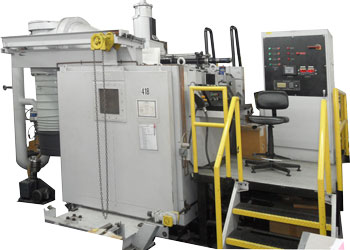
Two semi-automatic GTAW (TIG) welding machines — 3-Axis, Rotary, Boom and Beam type — for consistent, repeatable weld quality on complex geometries. Eight manual welding booths staffed by certified aerospace welders with average 20+ years of experience.
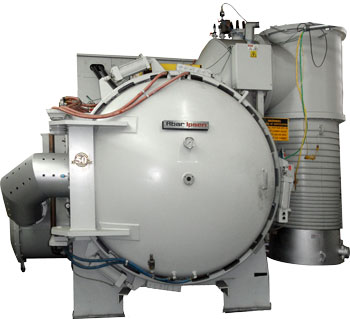
One salt bath dip brazing system with full pre and post-dip processing equipment. Aluminum dip brazing joins aluminum assemblies with exceptional strength and leak-proof seals — ideal for oil tanks, manifolds, and other fluid-carrying aerospace components.
Nine rotary and ram type EDM machines for machining complex forms in hardened super alloy materials where conventional cutting tools cannot reach. Augmented by a sophisticated supply chain for specialized EDM requirements beyond standard capabilities.
Two Sciaky spot weld machines and one Sciaky seam weld machine. Resistance welding provides rapid, repeatable joining of sheet metal components with precise heat control. Used for thin-wall aerospace structures where distortion must be minimized.
Certified air flow laboratory with full digital data acquisition capability. Critical for verifying the functional performance of nozzles, seals, inducers, diffusers, and other flow-critical components to OEM specifications before shipment.
Three 320KV X-Ray machines with all associated film developing and reading equipment maintained in-house. In-house Levels 2 and 3 certification means Kerns can conduct and certify its own radiographic inspections without third-party involvement — a significant quality control advantage.
Complete FPI facility including acid tech capability for detecting surface and near-surface discontinuities. In-house Levels 1, 2, and 3 certification means Kerns maintains full control over the entire penetrant inspection process from preparation through final evaluation.